2nd International Conference on Emerging Technologies and Computing
ICETC2026
April 23-26, 2026, Hammamet-Tunisia
One Resort Premium Hammamet Hotel
|
|
|
Invited TalksHigh resolution 3D Optical Underwater Imaging with Applications Junyu DONG, Professor, Ocean University of China, China Abstract: Due to the complex and challenging conditions of underwater work environments, traditional underwater photography is unable to achieve precise three-dimensional measurements, while acoustic imaging fails to capture high-resolution data and surface color or texture information. High-precision underwater optical 3D imaging can be applied across a wide range of fields, from the inspection and monitoring of marine engineering and other infrastructure projects, to detailed 3D scanning and measurement of seabed structures, such as coral, oyster reefs, and shell ridges, and further to high-precision 3D mapping underwater cable. This report primarily presents the high-precision 3D imaging equipment and technology developed by our research team. It achieves millimeter-level accuracy, with multiple performance indicators, including range resolution, horizontal resolution and sampling rate. Moreover, the system can be flexibly deployed on various types of underwater vehicles. Keywords: Computer vision, high-precision 3D imaging, underwater environments
Multimedia content protection William PUECH, Professor, University of Montpellier, France Abstract: More multimedia data, such as images, videos and 3D content, are transmitted over digital networks, stored or shared in the Cloud, and shared and visualized on social networks. In addition to the need to compress this multimedia data, which is very voluminous, for reasons of confidentiality, privacy or secret information, it is increasingly necessary to protect multimedia content directly, and not only the access to networks. In this talk, after detailing the specifics of each type of multimedia data, both in terms of compression and protection, we will present the various possible facets for protecting this multimedia content and illustrate with different applications from medical imaging to the Metaverse, passing through the manufacturing industry for fashion and videos from drones. The first part will be dedicated to data hiding, to differentiate between watermarking and steganography, and will finish with a discussion of steganalysis. The second part will detail the cryptographic aspects applied to multimedia content, distinguishing selective encryption from partial encryption, and concluding with crypto-compression (image, video and 3D object). The third part will present different methods of image obscuration, reversible or not, visible or not. We will see that non-visible image obscuration relies mainly on the generation of false images. And finally, methods for sharing secrets applied to images will be discussed. To conclude, we will also discuss the cat-and-mouse game, highlighting the adversarial attacks and defenses that must be taken into account. Keywords: Cybersecurity, multimedia data, content protection
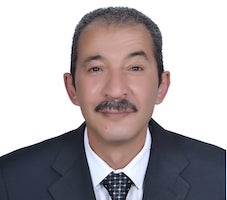
NBIC technologies are transforming the medical doctor into an engineer Abdennaceur KACHOURI, Professor, National Engineering School of Sfax (ENIS), Tunisia Abstract: The convergence of NBIC technologies (Nanotechnology, Biotechnology, Information Technology, and Cognitive Science) is profoundly transforming modern medicine. This evolution is redefining the role of the medical doctor, who is increasingly becoming an engineer of data, intelligent systems, and living processes. This talk highlights how artificial intelligence, data science, advanced medical imaging, and smart technologies are reshaping diagnosis, treatment, and clinical decision-making. It also discusses the implications for medical education, ethics, and the future skills required to train the physician-engineer of tomorrow. Keywords: Artificial intelligence, advanced medical imaging, smart technologies
|